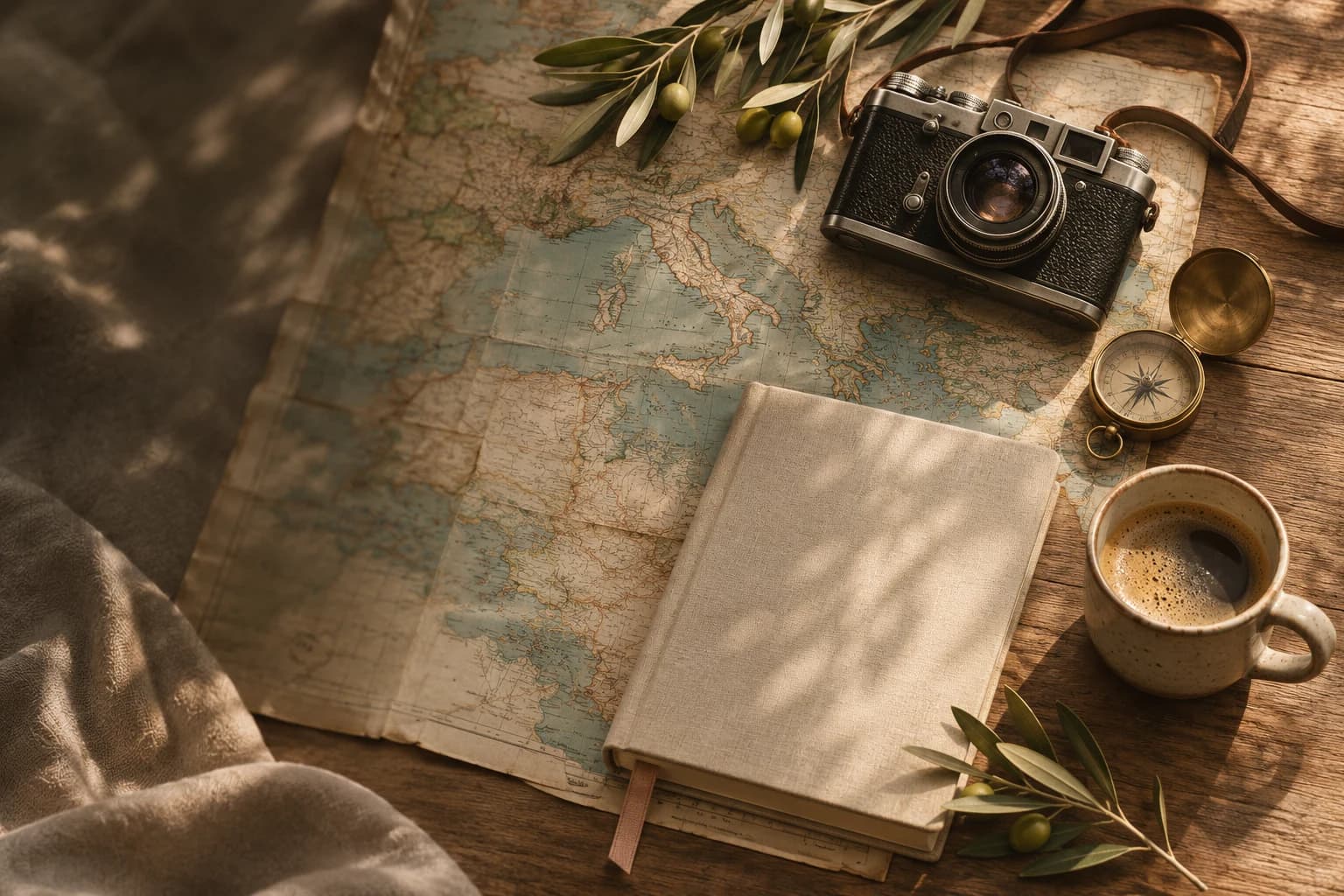
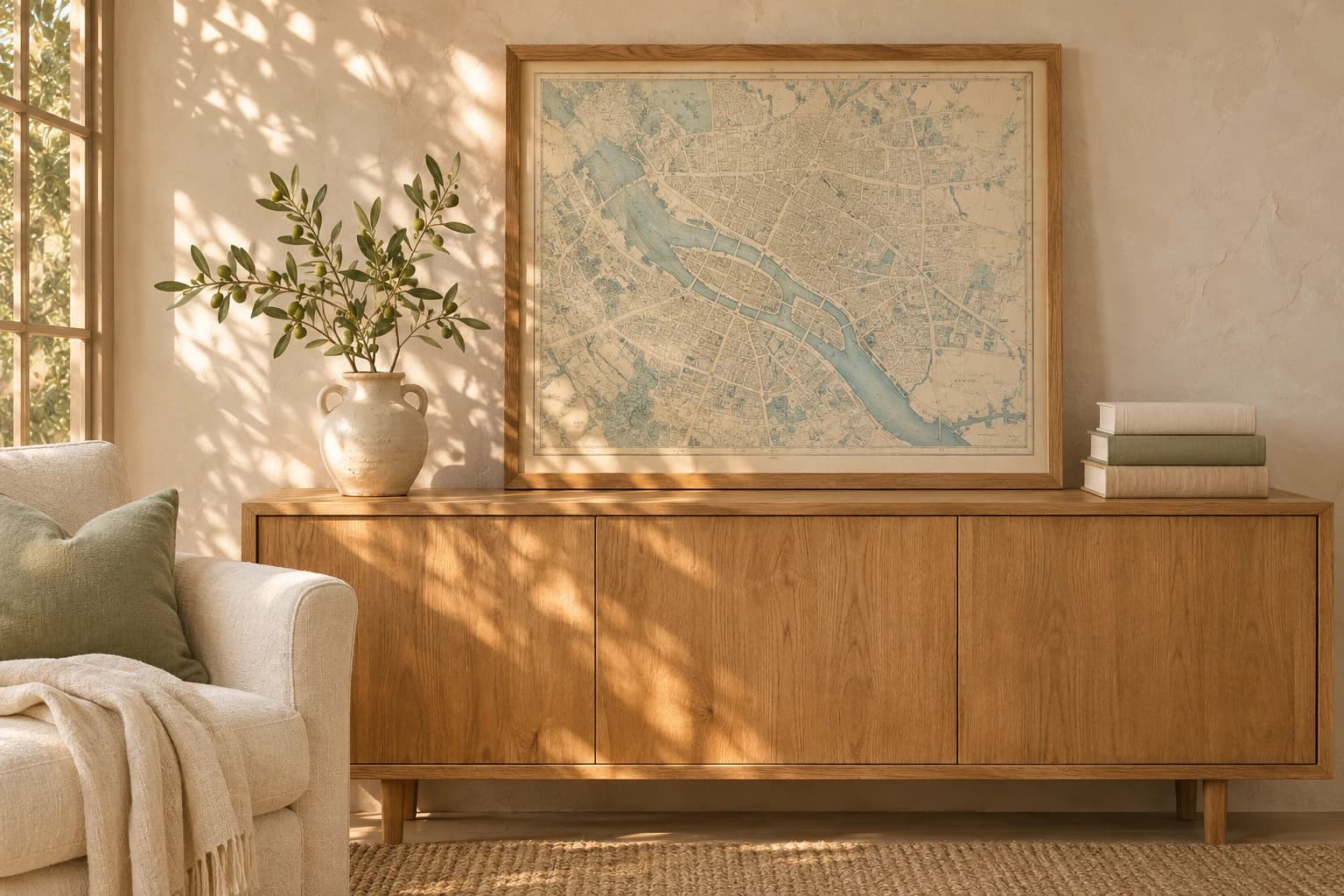
A map can be more than a record of streets and coastlines. It can bring a favorite place into the room you use every day. Whether you’re hanging a single print or building a small gallery, the aim is simple: give the place room to tell its story without making the space feel crowded.
Let the place lead
Choose a map because the place means something to you. It might mark a beginning, a favorite journey, or a city you now call home. That connection will outlast a decorating trend and gives you a natural answer when someone asks about it.
Then look at the colors already in your room. Muted blues work easily with natural wood and warm whites; monochrome maps can sit comfortably in a more minimal space. You don’t need an exact match — just a few tones that belong together.
Choose a frame that gives the map breathing room
A slim oak frame adds warmth without competing with the detail of a map. A simple dark frame can create a stronger outline, especially on a light wall. A mount or mat leaves a little space around the artwork and helps a busy composition feel calmer.
Check the print dimensions before buying a frame. Paper size and image size may differ, and a ready-made frame’s opening can hide a little of the edge. If place names or decorative details run close to that edge, allow enough room to see them.
Find the right relationship with your furniture
Above a sideboard, desk, or console, let the print feel connected to the furniture beneath it. Start by laying out paper templates or resting the frame safely in position before deciding on a final hanging point.
For a smaller print, try a shelf alongside a few books and a simple vase. Use a stable surface and secure artwork where needed, particularly around children or pets. Keep the arrangement loose enough that each item has a little space of its own.
Build a gallery around one shared thread
A gallery wall is easier to put together when the pieces have something in common. You could use the same frame color, similar paper tones, or a theme such as three places from a memorable journey.
Combine a map with a photograph or a small personal memento, rather than filling every space with the same kind of image. Lay the arrangement out on the floor first and take a photo. A little distance often makes it easier to see where the balance needs adjusting.
Keep the surrounding details simple
Maps already contain a lot to look at. Linen, plain ceramics, natural timber, and a little greenery create a quiet setting for those details. One or two supporting objects will often do more than a shelf filled with accessories.
Follow the print or frame maker’s care instructions, and consider how direct sunlight or humidity might affect paper over time. When your room changes, let the print move with it. A meaningful piece doesn’t have to stay in one place to keep its story.